| Home | Publications | Research | Teaching Portfolio | Links |
Awards and achievements of the group members:
- March 2021: Wendy Di has been promoted to an equivalent to a tenured professor at Argonne National Lab. Congratulations, Wendy!
- Tracey Oellerich was selected to participate in the HLF forum, 2020-2021
- Tracey Oellerich was accepted in the NIH data science summer program, 2020
- Robert Argus participated in the prestigious Heldelberg Laureate Forum in Sept 2019
- Katerine Saleme accepted a postdoctoral position at the University of Luxembourg starting August 2017
- Ivan Yegorov accepted a postdoctoral position at INRIA Sophia Antipolis, France starting July 2016
- Wendy Di is now an Assistant Computational Scientist at Argonne (a staff position), Spring 2016. We are proud of you, Wendy!
- Diego Torrejon won the prestigious NSF Graduate Research Fellowship, April 2014. Congratulations Diego!
- ME receives PSU Graduate School Alumni Society Early Career Award, January 2014
- ME wins Mason Emerging Researcher/Scholar/Creator award, October 2013
- Diego Torrejon was selected to participate in the CNA Summer School at CMU in June 2013 and in the IMA Industrial Modeling workshop in August 2013
- Wendy Di was selected to participate in the AWM workshop to be held at the SIAM Annual Meeting in July 2013
- Wendy Di accepted a postdoctoral position at Argonne National Lab starting August 2013
- Wendy Di gave a talk at the Copper Mountain conference on Multigrid methods in March 2013
- Claudio Torres accepted a tenure-track position in Chile starting Summer 2013
- Claudio Torres was selected to participate in the IPAM workshop ``Mesoscale and Continuum-scale Modeling of Materials Defects'' in November, 2012
- Daniel Sun was selected to participate in an REU program at Tulane University in Summer 2013
- Diego Torrejon wins Klaus Fischer Academic Achievement Award in Mathematics, April 2012
- Diego Torrejon wins a Young Innovator award at the Undergraduate Mathematics conference in Washington, April 2012
- Diego Torrejon wins Best Poster award at the MAA Undergraduate Poster Session at Joint Mathematical Meetings in Boston in January 2012: [pdf]
- Oak Ridge Powe Award - ORAU Palph E. Powe Award (GMU announcement)
Media about our work:
- Mason News - article about Mason Emerging Researcher/Scholar/Creator Award
- Bragging Rights: Mason Students Honored by Professional Organizations - an article in Mason News about Diego Torrejon's poster award at JMM12
- Irreversibility and the statistics of grain boundaries - a viewpoint on our paper in Physical Review B
- Mathematics and Polycrystalline Materials: An Entropic Approach to Texture Development - a SIAM News article about our work
- CMU News article - a news report about a joint work with D. Kinderlehrer (CMU)
A wealth of mathematical challenges lies beneath the surface of materials science, biology and other engineering and scientific fields, that present a formidable quest for an inquisite mind. We might not solve all the puzzles, but exploring the mathematical laws of nature still makes for a fascinating journey. Below are some of the areas we are currently exploring.
- Mathematical aspects of materials science and engineering
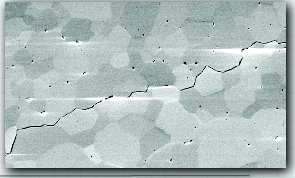
This part of the work is concerned with the internal structure of polycrystalline materials, such as metals, ceramics or semiconductors. The mesoscale, or microstructure, of such materials consists of aggregates of small single-crystal grains joined together at interfaces - grain boundaries - threaded with extended displacements of the lattice structure - such as dislocations - and seeded with point-like defects - such as vacancies and impurities. While the property of these elements is determined by microscopic properties, the interplay between these elements determines macroscopic behavior. For example, atomic forces determine the equilibrium shapes of small grains while the size of the grains partially determines the hardness of a material. In addition, hardness depends both on the dislocations restraining the relative motion of grains under stress and on defects impeding the dislocations. An interface separating grains in this network can be compared to a soap film separating two bubbles of air in soap froth, though it can be extremely more complex. Similar to soap bubbles, grains can meet either at triple junctions or at four-point junctions shared by four grains at a time. The existence of broken bonds in the atoms forming the grain boundary when compared to their arrangement in the interior of the crystal gives rise to the interfacial energy. The energetics and connectivity of this network of interfaces plays a role in many material properties and across many scales of use. Many interesting questions remain about the evolution of materials microstructure, which is the focus of current work.
- Voronoi tesselations: theory and applications
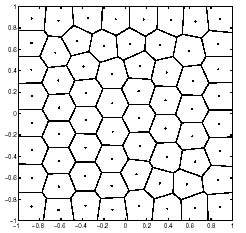
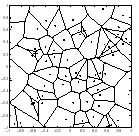
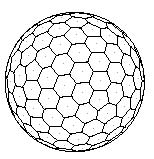
Centroidal Voronoi tessellations (CVTs) are special Voronoi tessellations of a bounded geometric domain such that the generating points of the tessellations are also the centroids (mass centers) of the corresponding Voronoi regions with respect to a given density function. Centroidal Voronoi Tessellations may also be defined in more abstract and more general settings. Figure below gives some examples of such tessellations. Due to the natural optimization properties enjoyed by CVTs, they have many applications in diverse fields such as data compression, optimal quadratures, vector quantization, image analysis, clustering, resource distribution, sensor networks, cellular biology, territorial behavior of animals, mesh generations and numerical solution of PDEs.
- Biomedical applications:
Some time ago I got interested in biological, chemical and medical applications and started several fruitful collaborations in those areas. The problems we have been looking at include ODE modeling for green chemistry, quick siRNA sequencing strategies, HIV modeling and others.
| GROUP MEMBERS | PROJECT | |
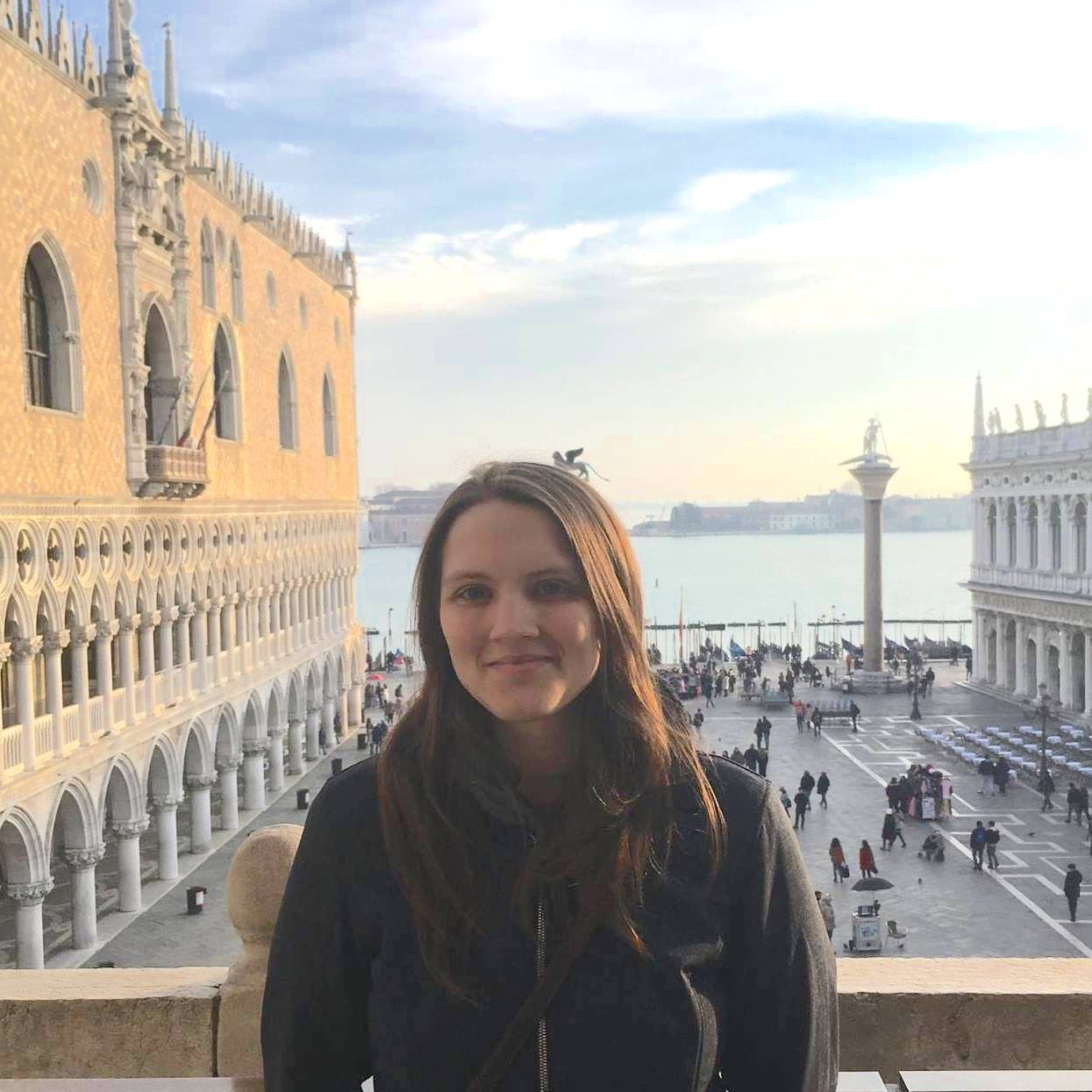 |
Tracey Oellerich, Ph.D. student date started: September 2018 |
Protein networks: adaptation and dynamics identification |
|
GROUP ALUMNI | ||
 |
Jeff Snider, Ph.D. student defended 2020 | New optimization based methodology for calculating thermodynamic equilibriun and calculating uncertainties
First position: Lead Operations Research Analyst, MITRE |
 |
Lindsey Wallace, EXTREEMS undergraduate student 2018-2019 |
Mathematical modeling of malaria transmission
First position: MS student in Data Analytics Engineering program, GMU |
 |
Robert Argus, EXTREEMS undergraduate student 2015-2019 |
Kinetic modeling of materials coarsening
First position: MS student, University of Connecticut |
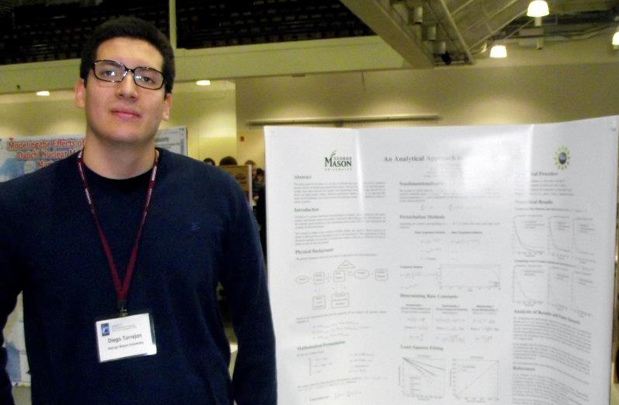 |
Diego Torrejon, Ph.D. student 2011 - 2017 |
Mathematical approaches in modeling chemical and materials systems
First position: Software Engineer at Spaceflight Industries, DC area |
 |
Katerine Saleme Ruiz, Postdoctoral Associate dates: Sept 2016-June 2017 |
The role of topology and geometry in the microstructure-property relations
First position: Postdoctoral Researcher, University of Luxembourg, Luxembourg |
 |
Ivan Egorov, Postdoctoral Associate dates: September 2015 - May 2016 |
Mesoscale modeling of complex materials systems
First position: Postdoctoral Associate, INRIA Antipolis, France |
 |
Zichao (Wendy) Di, Ph.D. student co-advised with Stephen Nash dates: Jan 2010 - Aug 2013 |
A multigrid optimization framework for vector quantization
First position: Postdoctoral Associate, Argonne National Lab |
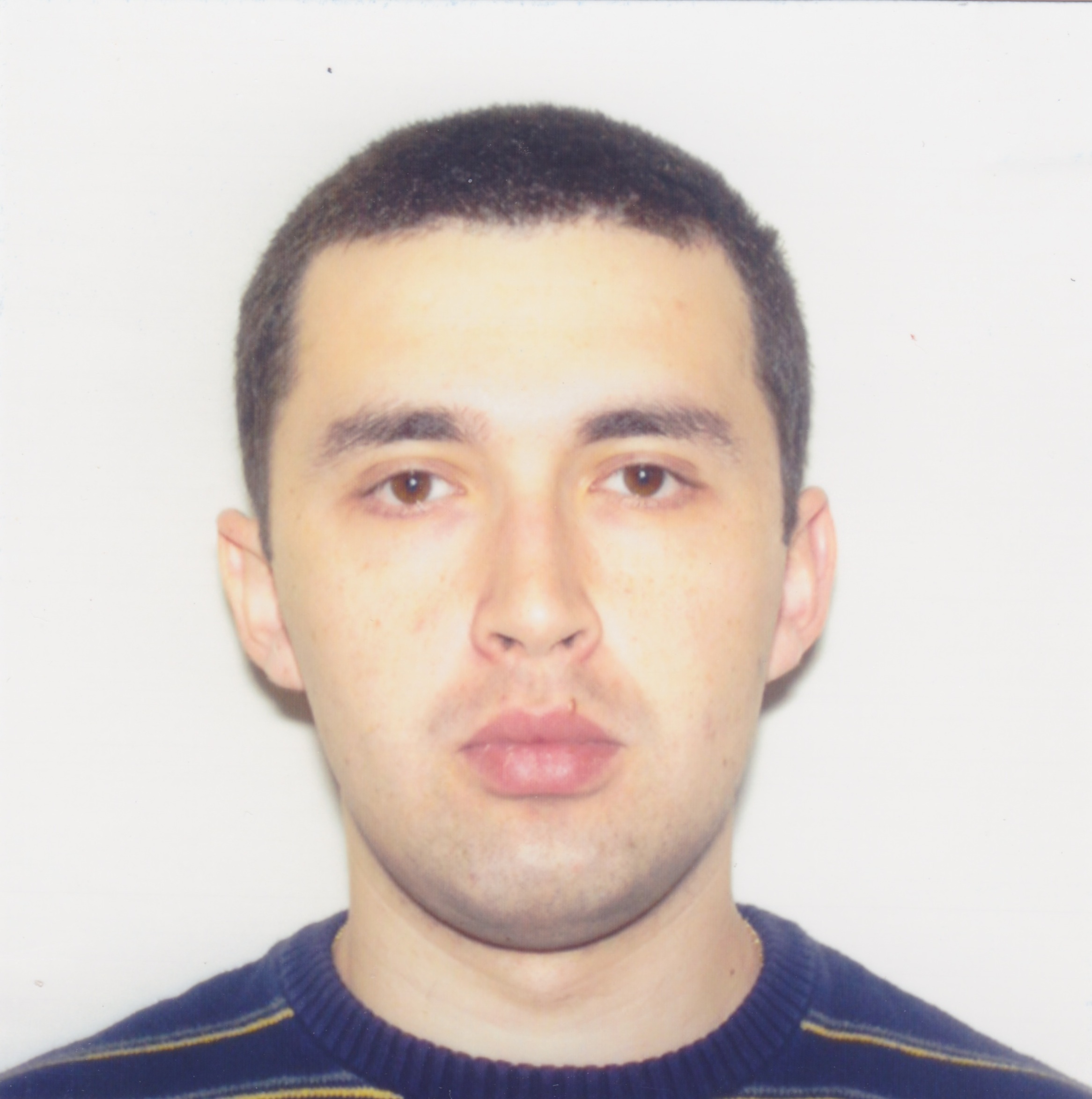 |
Claudio Torres, Postdoctoral Research Associate dates: June 2012 - June 2013 |
Multiscale modeling/simulation/analysis of complex materials systems First position: Assistant Professor, Universidad Tecnica Federico Santa Maria, Chile |
 |
Hasitha de Silva, M.S. student dates: Jan 2010 - May 2013 |
Mesoscopic modeling of microstructure evolution in polycrystalline materials First position: Ph.D. student at GMU Math |
|
Xiaodi (Daniel) Sun, undergraduate student dates: Jun - Dec 2012 |
Automation of phase diagram calculation |
|
Matt Farkas, REU student dates: Jun - Aug 2012 |
Error analysis of Monte Carlo simulations of grain growth |
|
Matt Villamarette, REU student co-advised with Dan Anderson dates: Jun - Aug 2012 |
Modeling Latent Cell dynamics of HIV virus in-vivo |
|
Alexander Price, REU student co-advised with Dan Anderson dates: Jun - Aug 2012 |
Modeling Latent Cell dynamics of HIV virus in-vivo |
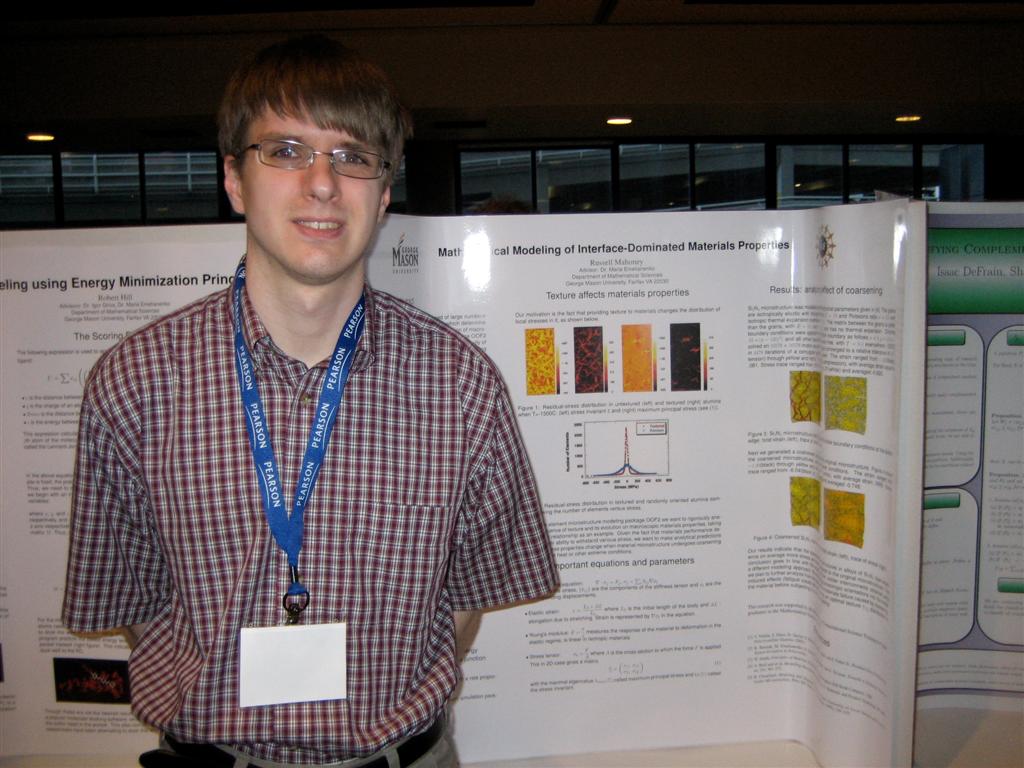 |
Russell Mahoney, CSUMS undergraduate student dates: Jun - May 2011 |
Analysis of interface-dominated materials properties |
|
Robert Hill, CSUMS undergraduate student co-advised with Igor Griva dates: Jun - May 2011 |
Constrained optimization approach to multicomponent phase diagram calculation |
|
Boris Gafurov, postdoctoral associate dates: Jan - Dec 2011 |
2D simulation of grain growth in polycrystals First position: Postdoctoral Associate at College of Education, GMU |
|
Sandra Varela, REU student dates: Summer 2010 |
Constrained optimization method for multicomponent phase diagram calculation |
|
Ross Kistler , REU student dates: Summer 2010 |
Uncertainty quantification in grain growth simulations |
 |
Jonathan Bode, graduate student co-advised with Ancha Baranova dates: 2008 - 2010 |
Systematic analysis of siRNA sequence data First position: Ph.D. student at GMU |
 |
Tom Stephens, undergraduate student dates: 2009 - 2010 |
New method for phase diagram calculation in multicomponent material First position: Ph.D. student at GMU |
 |
Josh Snyder, CSUMS student dates: 2009 - 2010 |
Analysis of Monte Carlo simulation of
crystalline grain growth First position: Ph.D. student at University of Colorado at Boulder |
|
Angela Dapolite, REU student, Honors thesis June 2009 - May 2010 |
"An Analytical and Numerical Study of Ordinary Differential Equations
in Green Oxidation Processes" Honors thesis, defended March 3, 2010 |
|
Charles Cook, REU student June 2009 - July 2009 |
Numerical Study of a Quantum Memory Model |